By Melissa Chester, BBA · Medically reviewed by Phyllis J. Gee, MD, FACOG
Published · Last reviewed
For people who have had a positive experience with NAD+ IV therapy, the conversation often goes beyond vitamins, supplements and cellular biology. They talk about feeling more energetic, thinking more clearly, or simply having a better sense of well-being. Here is what is driving the excitement, and what the science actually shows.
Some people describe the difference with genuine enthusiasm, especially after spending months searching for ways to address persistent tiredness or to feel more like themselves. That enthusiasm has helped make NAD+ IV therapy one of the more intriguing developments in integrative wellness.
Behind the personal experiences is a naturally occurring molecule that scientists have studied for decades. NAD+, short for nicotinamide adenine dinucleotide, plays an essential role in cellular energy production, metabolic function, DNA maintenance, and several biological processes associated with healthy aging.
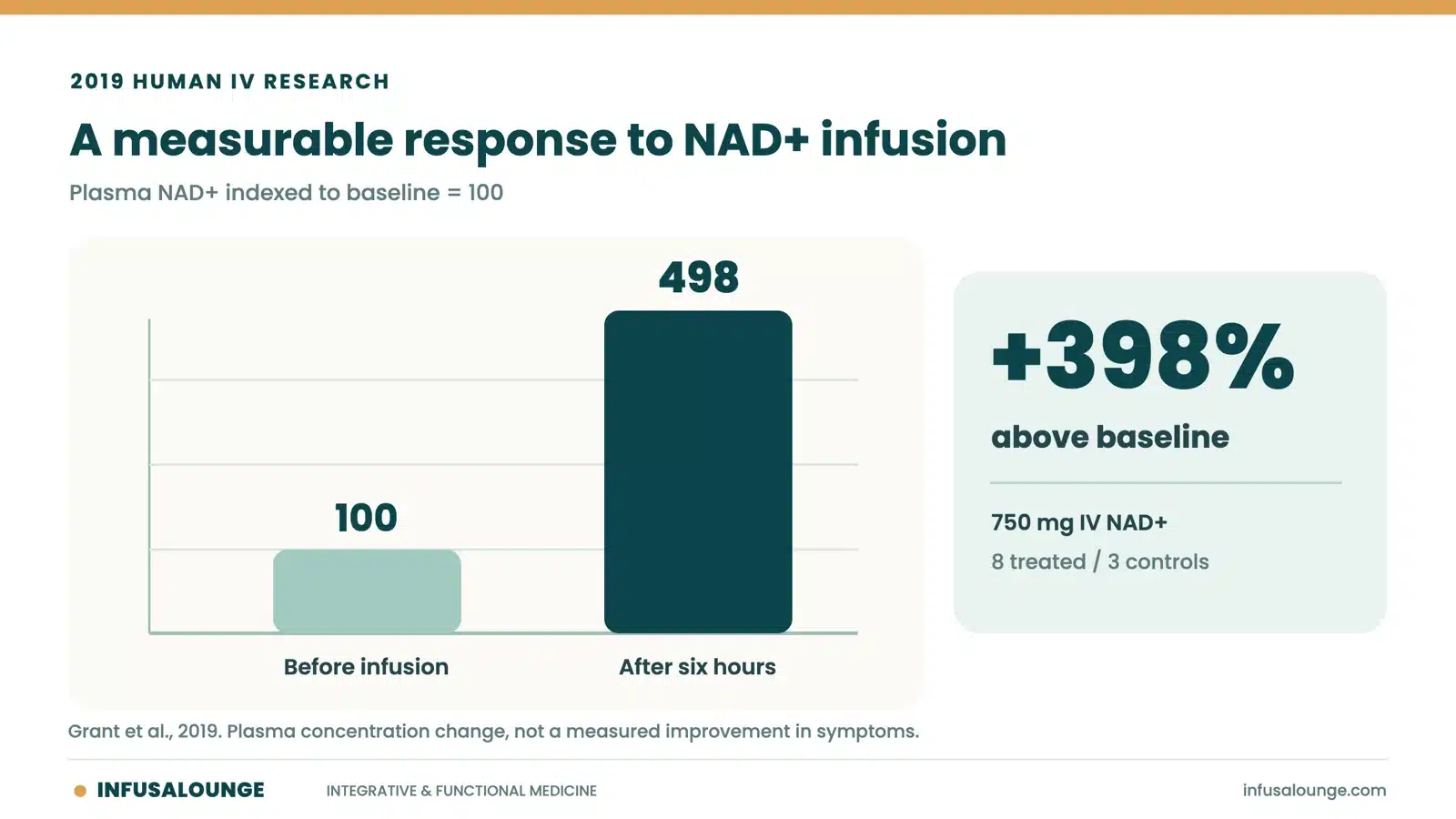
The scientific findings are becoming increasingly interesting. In a landmark human study, researchers measured a 398% increase in circulating NAD+ following a six-hour intravenous infusion. Other human trials involving related NAD+ compounds have reported encouraging results involving insulin sensitivity, walking performance and sleep quality. While researchers are still determining how these discoveries translate into specific clinical benefits, they provide a strong scientific foundation for continued investigation.
At InfusaLounge Integrative & Functional Medicine in Allen, Texas, we believe people deserve to understand both the emerging science and the experiences that have made NAD+ therapy so appealing. Whether you are interested in cellular wellness, healthy aging, physical resilience, or simply learning about new approaches to supporting your health, understanding NAD+ is a worthwhile place to start.
Why are people so interested in NAD+ IV therapy?
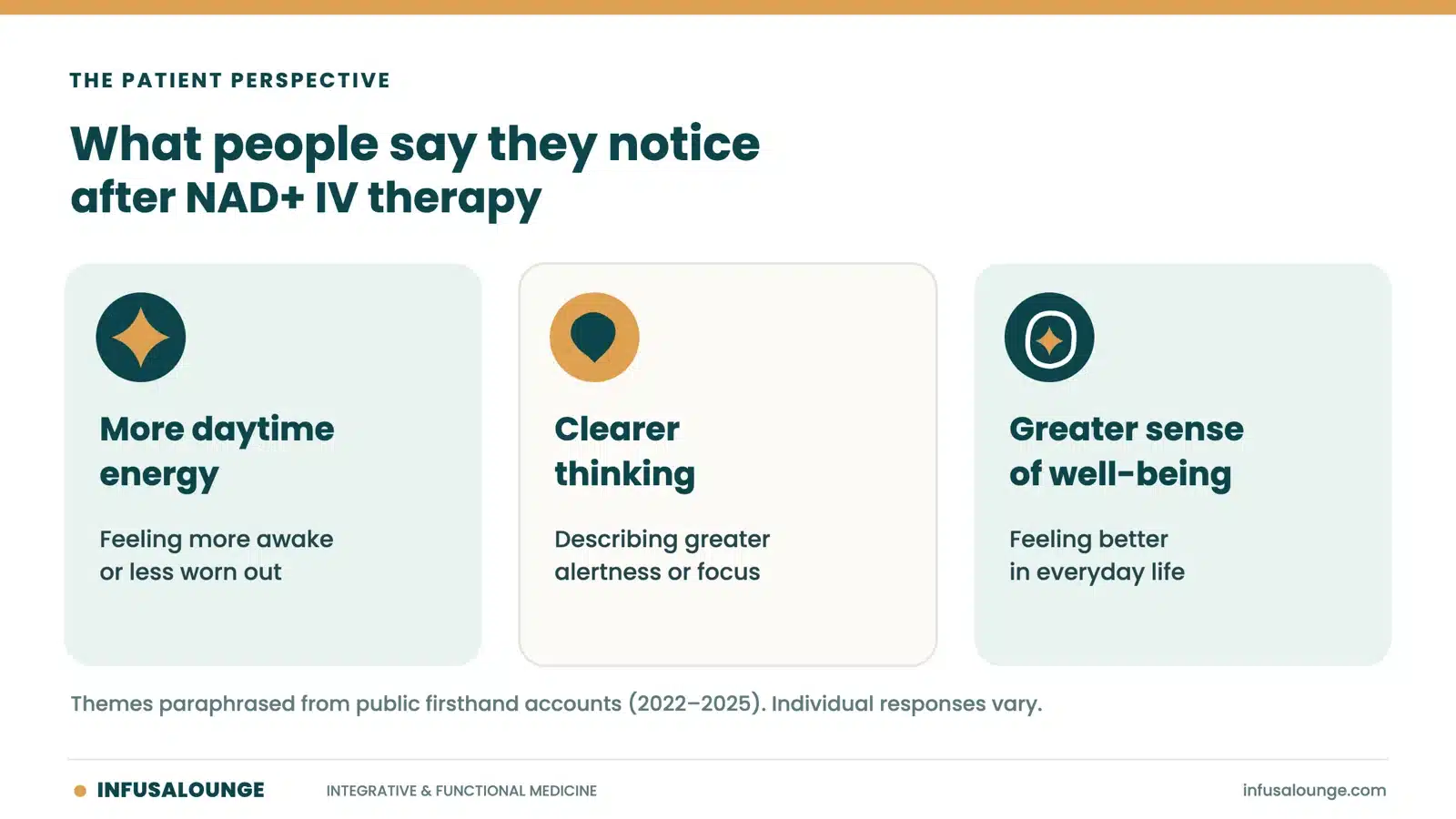
One of the most compelling aspects of NAD+ IV therapy is the enthusiasm expressed by people who have received it. Experiences differ, but positive firsthand accounts describe changes that people notice in everyday life, such as feeling more awake in the morning, having more consistent energy, or experiencing a greater sense of mental clarity.
For someone who has been struggling with low energy or difficulty concentrating, those kinds of changes can feel especially meaningful. That helps explain why NAD+ has attracted attention not only among longevity researchers and wellness professionals, but also among people who simply want to feel and function at their best.
What do people actually report experiencing?
In public firsthand accounts shared online, one person described receiving an IV treatment after dealing with fatigue and brain fog for about two months. They reported a noticeable boost in energy and clarity, considered the infusion worthwhile, and looked forward to returning for another session.
Another account described greater calmness, cognitive clarity and energy after a series of NAD+ infusions. When asked for specifics, the person explained that mornings had changed noticeably. Instead of waking up exhausted, they described feeling rested and no longer needing their usual afternoon nap.
In a more recent account, a person receiving NAD+ alongside IV hydration and glutathione described feeling more energetic and noticing improvements in overall well-being. Because that treatment included multiple components, there is no way to know which one contributed to the changes, but the account reflects the kind of positive experience that continues to generate interest in infusion therapy.
These are personal experiences, not controlled clinical findings. They cannot establish how often an outcome occurs, or predict what someone else will experience. They are, however, authentic examples of why people become interested in NAD+ IV therapy, and why researchers have good reason to study patient-reported outcomes more closely.
Why personal experiences matter
Clinical research is what establishes whether a treatment produces a particular benefit. Personal experiences serve a different purpose. They help researchers understand which changes people notice, what they value, and which questions deserve further study.
Energy, focus and overall well-being are especially relevant because they shape daily life in ways that can be hard to capture through laboratory measurements alone. A blood test may reveal a biochemical change, but learning whether someone feels more alert, sleeps better, or notices a difference in everyday activities requires different kinds of research.
The growing interest in NAD+ reflects both sides of that story: a compelling biological foundation, along with personal experiences that have encouraged people to explore the therapy and scientists to ask more detailed questions.
What is NAD+, and why does your body need it?
NAD+ is a coenzyme found in virtually every living cell. It is often described as an energy molecule, but it does not provide fuel the way carbohydrates, fats or proteins do. Instead, NAD+ helps cells carry out the chemical reactions that convert nutrients into usable energy.
Every organ depends on these processes. Your muscles need energy for movement, your brain requires a constant supply to keep neurons communicating, and your heart relies on continuous energy production to support circulation. NAD+ takes part in the metabolic pathways that make all of this possible.
The connection between NAD+ and cellular energy
One of NAD+’s most important roles is transferring electrons during metabolic reactions. As NAD+ accepts electrons, it becomes NADH, a related form that takes part in additional steps of energy production.
Much of this activity is closely tied to the mitochondria, the structures responsible for producing most of the ATP that cells use. ATP, or adenosine triphosphate, supplies the immediately usable energy for cellular activity.
Because NAD+ sits in these pathways, scientists are interested in how its availability and metabolism may influence normal cellular function. That connection is especially relevant to research on physical performance, metabolic health, and conditions linked to changes in how cells regulate energy.
NAD+ and cellular maintenance
NAD+ also contributes to biological processes beyond energy metabolism. Certain enzymes involved in responding to DNA damage, including the poly(ADP-ribose) polymerases, depend on NAD+ to function.
Another family of proteins, the sirtuins, also requires NAD+. Sirtuins take part in cellular signaling, metabolism and responses to physiological stress, which makes them important subjects in aging research.
Researchers are studying how NAD+ metabolism interacts with these processes, and whether targeted interventions might have useful applications. The essential biological role of NAD+ is well established. The clinical benefits of giving additional NAD+ remain an active area of research.
How does NAD+ IV therapy work?
NAD+ IV therapy delivers a preparation containing nicotinamide adenine dinucleotide directly into the bloodstream through an intravenous infusion. The treatment bypasses the digestive system, which is a different route of administration from oral supplements.
That distinction has drawn scientific attention, because researchers can measure how circulating NAD+ and related metabolites respond during and after an infusion. The body still processes NAD+ through interconnected metabolic pathways, though, and entering the bloodstream does not automatically mean intact NAD+ reaches every cell unchanged.
NAD+ IV therapy compared with oral supplements
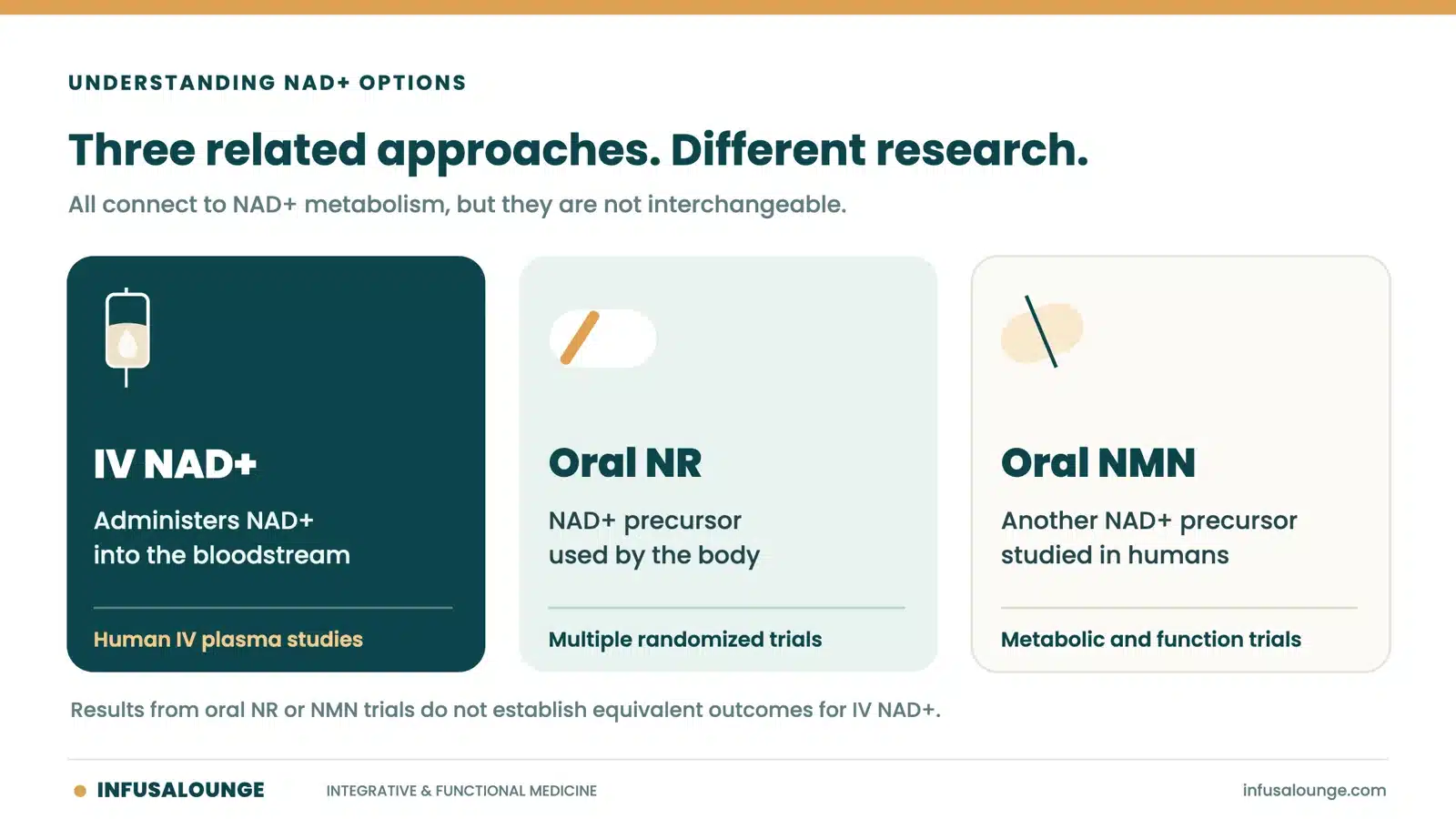
Three related compounds come up often in discussions about NAD+ therapy.
NAD+ IV therapy delivers a preparation containing NAD+ directly into circulation. Researchers have studied its effects on plasma NAD+ concentrations, related metabolites and selected biological markers.
Nicotinamide riboside (NR) is a precursor the body can use to make NAD+. It has been evaluated in numerous human studies, including randomized trials of physical and metabolic outcomes.
Nicotinamide mononucleotide (NMN) is another precursor involved in NAD+ synthesis. Human studies have examined its effects on insulin sensitivity, walking performance, sleep quality and NAD-related blood measurements.
These interventions share important biological relationships, but their clinical findings cannot automatically be transferred from one to another. Research on oral NR or NMN helps establish what may be possible through NAD+ metabolism, while direct IV studies provide information about the specific effects of intravenous administration.
The landmark human study: IV NAD+ raised plasma levels by 398%
One of the most frequently discussed findings in NAD+ IV research comes from a 2019 study published in Frontiers in Aging Neuroscience. A team led by Ross Grant examined how intravenous NAD+ affected circulating concentrations and related metabolites in healthy adults.
The study included 11 men between the ages of 30 and 55. Eight participants received 750 milligrams of intravenous NAD+ over six hours, while three received saline. Blood and urine samples were collected during and after administration to measure changes in NAD+ metabolism.
What did researchers find?
By the end of the six-hour infusion, plasma NAD+ concentrations had risen roughly 398% above baseline in the treatment group. The increase was statistically significant and differed significantly from the saline control group.
Researchers also measured notable increases in several related metabolites, including nicotinamide and ADP-ribose. Plasma NAD+ remained elevated two hours after the infusion ended, showing that the measurable response persisted beyond the administration period.
One especially interesting observation was that NAD+ concentrations did not rise significantly during the first two hours. The investigators suggested that rapid metabolism, tissue uptake, or both, could help explain the pattern.
Why this finding matters
The significance goes beyond the size of the increase. The study showed that intravenous NAD+ can produce substantial, measurable changes in circulating NAD+ and related metabolic pathways in humans.
That is valuable information for researchers exploring the biological effects of NAD+ administration. The study focused on pharmacokinetics rather than symptom improvement, but it established an important foundation for investigating potential clinical applications.
Encouraging human research on NAD+ and physical wellness
Scientific interest in NAD+ extends well beyond intravenous infusions. Randomized human trials of NAD+ precursors have begun exploring whether influencing NAD+ metabolism can produce measurable changes in physical function, insulin sensitivity and other health-related outcomes.
Several findings are interesting because they involve outcomes that go beyond blood chemistry alone. These studies used oral NR or NMN rather than intravenous NAD+, but they offer valuable evidence about the wider potential of NAD-targeted interventions.
1. Improved insulin sensitivity in women with prediabetes
In 2021, researchers at Washington University published a randomized, double-blind, placebo-controlled trial in Science involving 25 postmenopausal women with prediabetes who had overweight or obesity.
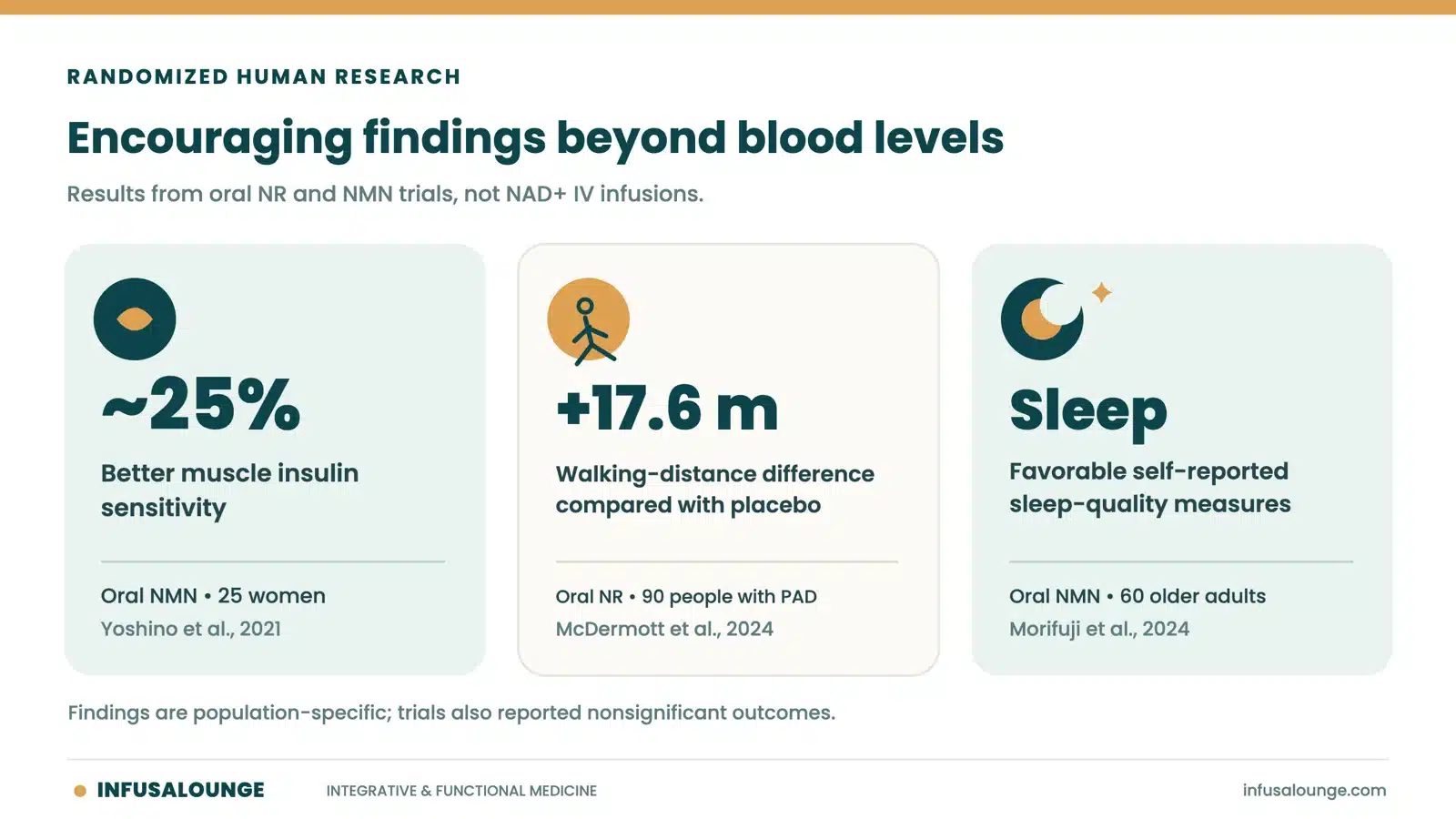
Participants received oral NMN or placebo for 10 weeks. The investigators found that NMN improved insulin-stimulated glucose disposal in skeletal muscle by about 25%, while the placebo group did not show a comparable improvement.
This was a noteworthy result because it involved a physiological measure of insulin sensitivity, not simply a rise in circulating NAD+. Other metabolic measures did not significantly improve, but the trial demonstrated a targeted effect worth investigating further.
2. Better walking performance in a randomized clinical trial
A 2024 study published in Nature Communications examined nicotinamide riboside supplementation in 90 people with peripheral artery disease, a condition that can make walking difficult.
Over six months, participants taking oral NR improved their six-minute walking distance by an average of 7.0 meters, while the placebo group declined by an average of 10.6 meters, a 17.6-meter difference between the groups. The result met the study’s prespecified statistical criterion, although its P value of 0.08 did not meet the conventional two-sided 0.05 threshold. The finding needs confirmation, but it is encouraging because walking performance is a functional outcome that matters in everyday life.
3. Sleep quality and walking speed in older adults
Sleep is another interesting area of NAD+ research, given its importance to energy, concentration and general well-being.
A 2024 randomized, double-blind, placebo-controlled study published in GeroScience evaluated 60 older adults receiving either oral NMN or placebo for 12 weeks. Researchers observed increased NAD-related blood measurements and favorable differences in several secondary outcomes. Participants taking NMN performed better on a four-meter walking test and reported improvements in sleep quality, including reduced daytime dysfunction. The primary stepping-test outcome did not significantly improve, but the secondary findings point to promising directions for additional research.
What these discoveries mean
Together, these studies show why NAD+ research continues to attract serious scientific interest. Investigators have demonstrated changes in specific measures of insulin sensitivity, physical performance and sleep quality in selected human populations.
Not every trial has produced favorable results, and researchers are still working out which interventions, doses and populations may benefit most. Even so, these findings show that NAD-related research has moved beyond laboratory theory and has begun identifying measurable effects in humans.
NAD+ and healthy aging: an interesting area of longevity research
Healthy aging involves more than adding years to life. It includes maintaining physical ability, supporting cognitive function, preserving metabolic health, and understanding how cells respond to the changes that happen over time.
NAD+ has become an important subject in this field because it takes part in several pathways tied to cellular maintenance and stress responses. Researchers are especially interested in its relationships with mitochondrial metabolism, sirtuin activity and DNA-damage response mechanisms.
Preclinical work has produced encouraging findings on selected metabolic and functional outcomes. Human studies have also shown that NAD+ precursors can raise NAD-related biomarkers, though clinical benefits have varied across populations.
A 2026 systematic review that evaluated 113 studies, including 33 human intervention studies, concluded that NAD+ augmentation shows biological activity and warrants further investigation. The authors also found that evidence for broad anti-aging or wellness benefits remains inconclusive, particularly for direct IV NAD+ treatment.
For people interested in longevity, the most compelling part of this research is the chance to better understand how cellular metabolism and maintenance influence health over time. Scientists have not established that NAD+ IV therapy reverses aging or extends lifespan, but the underlying pathways remain important areas of study. For a broader look at what this field can and cannot measure yet, see our guide to healthspan versus lifespan and what longevity medicine can actually measure.
What is an NAD+ IV therapy appointment like?
For someone considering an NAD+ infusion, understanding the experience can matter as much as understanding the science.
At InfusaLounge, NAD+ is offered as part of our integrative therapy services. The clinic provides different NAD+ administration options and individualized treatment planning under medical oversight, so patients can discuss the approach that may be appropriate for their circumstances.
Before your infusion
A healthcare professional should review your medical history, medications, relevant health concerns and treatment goals. This helps determine whether NAD+ IV therapy is appropriate to consider, and whether additional evaluation may be needed.
People explore NAD+ therapy for different reasons, so the discussion should reflect individual circumstances rather than a single approach for everyone. Your clinician can also explain the proposed amount, the expected appointment length and possible reactions.
During your infusion
An intravenous catheter is placed into a vein, and the preparation is given at a clinician-directed rate. NAD+ infusions are often delivered gradually, because some people experience uncomfortable sensations when the infusion runs too quickly.
Those sensations may include nausea, abdominal discomfort, flushing or other infusion-related symptoms. Patients should speak up about any discomfort right away so the clinical team can assess the situation and decide whether to slow or stop the infusion.
In a small 2026 retrospective comparison involving six NAD+ recipients and eight intravenous NR recipients, infusion-related symptoms were reported by all six NAD+ recipients. That reinforces the importance of discussing tolerability and receiving appropriate clinical supervision, although the study was too small to establish how often reactions occur in the wider population.
After your infusion
Experiences after NAD+ therapy vary. Some people describe feeling energized or more mentally alert, while others notice subtler changes, delayed effects, or no meaningful difference.
There is no universally established timeline for feeling an effect, and no evidence-based maintenance schedule for general wellness. A thoughtful approach involves discussing expectations in advance and evaluating any experiences in the context of your broader health.
NAD+ IV therapy safety: what patients should know
NAD+ IV therapy is a medical procedure, so appropriate screening, preparation and supervision matter. Potential risks include vein irritation, bruising, infection, infusion-related reactions, and complications tied to the preparation or quality of the product being administered.
The U.S. Food and Drug Administration has specifically warned against using unsuitable food-grade ingredients to compound sterile injectable NAD+ products. The agency has received reports of adverse reactions involving severe chills, shaking, vomiting and fatigue, sometimes requiring medical treatment.
These concerns underscore the importance of properly sourced ingredients, appropriate sterile preparation and qualified clinical oversight. Chest pain, difficulty breathing, severe dizziness or other concerning symptoms during or after an infusion require prompt medical assessment.
Compounded NAD+ products are not FDA-approved finished medications for treating or preventing disease, and long-term safety data for repeated infusions remain limited. Patients should feel comfortable discussing the source of the preparation, their medical history, possible risks and realistic expectations with their treating clinician.
Why explore NAD+ therapy at InfusaLounge?
When considering an emerging wellness therapy, the treatment itself is only part of the decision. The setting, the clinical team, medical oversight and the chance to ask informed questions all matter too.
InfusaLounge Integrative & Functional Medicine has served the Allen, Texas community since 2018. What began as a dedicated IV therapy practice has grown into an integrative and functional medicine clinic offering intravenous therapies, diagnostic evaluations and other healthcare services.
Under the medical direction of Phyllis J. Gee, MD, FACOG, the practice offers NAD+ therapy among its available services. Published treatment options include several IV amounts as well as additional administration approaches, with clinical evaluation helping guide treatment planning.
For patients curious about NAD+, InfusaLounge offers a chance to explore the available options within a medical setting and talk through current research, personal goals and treatment considerations. The focus is on informed, individualized decisions rather than assuming that the same intervention is right for everyone.
NAD+ IV Therapy in Allen, TX
Curious whether NAD+ therapy fits your goals? At InfusaLounge, NAD+ is offered within a medical setting, with individualized planning under physician oversight, so you can weigh the research and your own goals with a qualified clinician.
Explore NAD+ IV Therapy at InfusaLounge →
Want to talk it through? Contact us or view treatment pricing →
Frequently asked questions about NAD+ IV therapy
What are the potential benefits of NAD+ IV therapy?
NAD+ plays an essential role in cellular energy metabolism, DNA maintenance and biological processes tied to normal cellular function. Early human IV research has shown measurable increases in circulating NAD+, and some people report positive experiences involving energy, mental clarity and overall well-being. Researchers are still investigating whether these effects translate into consistent clinical benefits.
Why do people choose NAD+ IV therapy?
People become interested for many reasons, including curiosity about cellular wellness, healthy aging, energy metabolism and emerging longevity research. Others are encouraged by positive firsthand experiences shared by people who have received infusions. A clinical discussion can help clarify what is known and whether the therapy is appropriate to consider.
How might someone feel after an NAD+ infusion?
Some people describe feeling more energized, mentally alert or generally better. Others report subtler experiences or no noticeable change, and discomfort during administration is also possible. There is no established timeline or predictable pattern of improvement, which is why individual experiences should not be treated as guaranteed outcomes.
Is IV NAD+ different from oral NAD+ supplements?
Yes. Intravenous NAD+ delivers the compound directly into the bloodstream, while oral NR and NMN supply precursors the body can use to make NAD+. Oral precursors have been evaluated in more randomized human trials, while IV-specific research is still developing. Current evidence has not established that either approach produces superior overall wellness outcomes.
How long does an NAD+ IV infusion take?
Infusion time depends on the amount administered, the clinical protocol and individual tolerance. Some treatments take several hours, especially when the rate is adjusted for comfort. Your clinical team can explain the anticipated appointment length and what to expect before treatment.
How often should someone receive NAD+ IV therapy?
There is no universally established, evidence-based schedule for NAD+ IV therapy intended for general wellness or healthy aging. Different clinical and commercial protocols exist, but an optimal regimen has not been demonstrated in large controlled trials. Frequency and suitability should be discussed with a qualified healthcare professional.
What should I ask before trying NAD+ therapy?
A useful conversation starts with your goals, medical history, medications and expectations. You can also ask about the preparation’s source, the infusion process, possible reactions, cost and the available clinical evidence. Understanding these details helps you make an informed decision without relying on exaggerated promises.
The bottom line: understanding the excitement around NAD+ IV therapy
There is a good reason NAD+ keeps attracting attention from scientists, clinicians and people interested in cellular wellness. It is an essential molecule involved in energy metabolism, DNA maintenance and several pathways that influence normal cellular function.
Researchers have shown that intravenous NAD+ can produce substantial changes in circulating NAD+ concentrations and related metabolites. Human studies of oral NAD+ precursors have also reported encouraging findings on insulin sensitivity, walking performance and sleep quality in selected populations.
Alongside these discoveries are the personal experiences of people who describe feeling more energetic, mentally alert or generally better after NAD+ infusions. Those stories are meaningful to the people sharing them, even as researchers continue working to establish how often such benefits occur and whether they are directly caused by treatment.
The scientific picture is still developing, but the interest in NAD+ is grounded in real biological discoveries and a growing body of human research. For anyone curious about this emerging area of wellness, learning about NAD+ therapy can be a worthwhile part of a broader conversation about health, personal goals and available options.
Explore NAD+ IV therapy at InfusaLounge in Allen, Texas
At InfusaLounge Integrative & Functional Medicine, we believe good healthcare begins with understanding the individual. Your health history, questions, experiences and goals all deserve consideration when exploring an emerging treatment.
We serve patients throughout Allen, McKinney, Plano, Frisco, Fairview, Lucas and surrounding North Texas communities, providing integrative and functional medicine services, advanced diagnostic evaluations and medically supervised therapies in a welcoming clinical environment.
Whether you want to learn more about NAD+ research, explore available treatment options, or discuss your own wellness goals, our team welcomes the chance to help you make an informed decision. Explore NAD+ IV therapy at InfusaLounge, or contact us to start the conversation.
This article is for educational purposes and does not replace individualized medical advice, diagnosis or treatment. NAD+ IV therapy is not an FDA-approved treatment for fatigue, cognitive decline, aging or other medical conditions. Findings from oral NAD+ precursors should not be assumed to apply to intravenous NAD+ therapy. Individual experiences vary, and patients should consult an appropriately qualified healthcare professional before considering an intravenous treatment.
Sources
- Grant R, et al. (2019). A pilot study investigating changes in the human plasma and urine NAD+ metabolome during a 6-hour intravenous infusion of NAD+. Frontiers in Aging Neuroscience. pmc.ncbi.nlm.nih.gov
- Yoshino M, et al. (2021). Nicotinamide mononucleotide increases muscle insulin sensitivity in prediabetic women. Science. pmc.ncbi.nlm.nih.gov
- McDermott MM, et al. (2024). Nicotinamide riboside for peripheral artery disease: the NICE randomized clinical trial. Nature Communications. pmc.ncbi.nlm.nih.gov
- Morifuji M, et al. (2024). Ingestion of β-nicotinamide mononucleotide increased blood NAD levels, maintained walking speed, and improved sleep quality in older adults. GeroScience. pmc.ncbi.nlm.nih.gov
- Gallagher and Emmanuel (2026). NAD+ supplementation for anti-aging and wellness: a PRISMA-guided systematic review of preclinical and clinical evidence. Ageing Research Reviews. pubmed.ncbi.nlm.nih.gov
- Reyna et al. (2026). Intravenous infusion of NAD+ versus nicotinamide riboside (NR): a retrospective tolerability pilot study in a real-world setting. Frontiers in Aging. pmc.ncbi.nlm.nih.gov
- U.S. Food and Drug Administration. FDA reminds compounders to use ingredients suitable for sterile compounding. fda.gov
- InfusaLounge Integrative & Functional Medicine. NAD+ Therapy. infusalounge.com
- InfusaLounge Integrative & Functional Medicine. Treatment Pricing. infusalounge.com